
3-4 December 2026

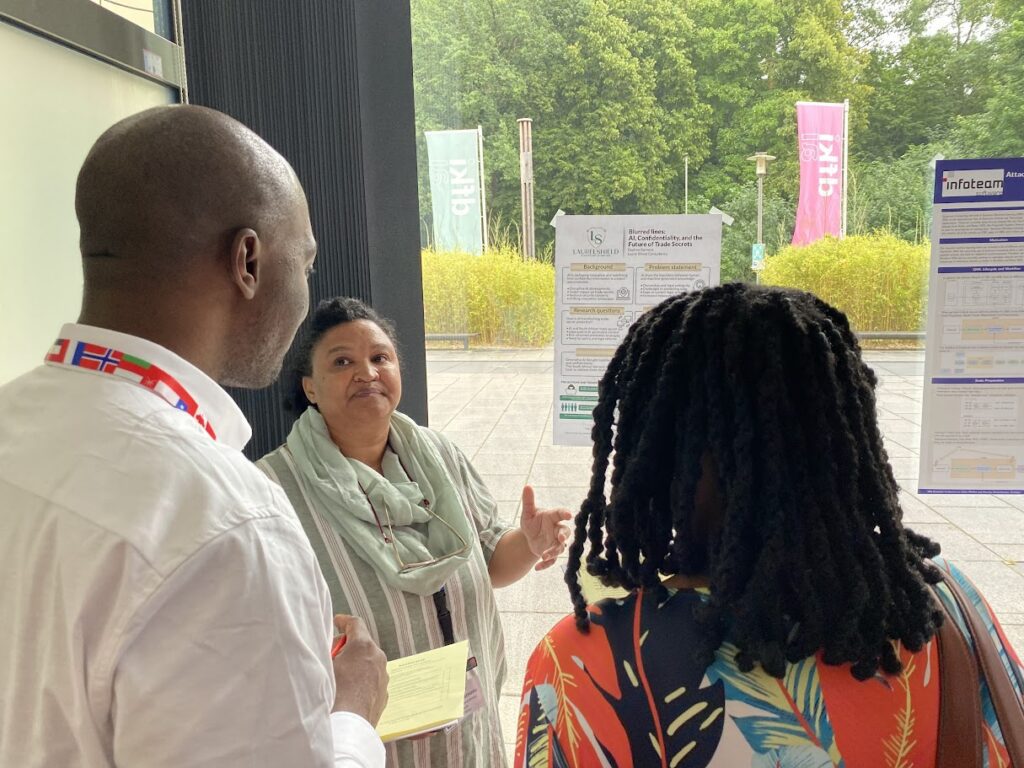
Kaiserslautern, Germany
ICAIR 2026
7th International Conference on AI Research
Call for Papers

- Academic Papers
- Case Studies
- Work in-Progress Papers
- PhD Papers
- Masters Papers
- Posters and Presentations
- Non- Academic or Practitioner Contributions
Aims and Scope
The International Conference on AI Research (ICAIR) is an opportunity for academics, practitioners, and consultants from around the world who are involved in the study, management and development of artificial intelligence related issues in education, in business or in the public sector to publish and present their research. There are several strong strands of research and interest that are developing in the area including the consequences of AI and robotics on work and society, the governance of AI, risks and benefits of AI, ethical dilemmas related to AI, the employment of Chatbots and GenAI. We also welcome applications of AI to solving some of the World’s global challenges such as to improve the health and wellbeing of children and young people in growing urban environments around the world; to help civilisation migrate from hydrocarbons to non-fossil sources of energy and other activities to mitigate the climate crisis; to contribute to the continued eradication of extreme poverty in the World.
- The consequences of AI and robotics on work and society
- The governance of AI and AI in governance
- Regulations for AI safety
- The future of the professions
- Enabling knowledge networks with cognitive computing and other technologies
- Ethical and acceptable social behaviours
- Organisational and social impact of AI
- How can AI explain its thinking?
- Legal services
- Algorithmic bias in AI
- Quantum AI
- Further applications of AI including:
- GenAI and AI Chatbots
- Fintech and the financial services industry
- Life sciences and healthcare
- Utilities and transport management services
- In the development of Smart-cities
- In government
- In education and training
- In gaming
- In scientific research
- In healthcare
- In marketing
- Collaborative robots and human-robot interaction
- Roboethics
- Exploiting robotics in educational praxis
- Society 5.0
Mini Tracks
The Epistemology of AI – Redefining Knowledge in the Age of Generative Systems
Mini Track Chair: Dr. Mitt Nowshade Kabir, Trouvus.com – An AI consulting company.
Generative AI systems now routinely produce text, images, code, models, and even scientific hypotheses at scale. As these systems move from tools of assistance to active participants in knowledge production, they raise foundational questions that cut across philosophy, science, education, and institutional practice. This mini track invites contributions that interrogate the epistemological consequences of artificial intelligence: not merely how AI is used, but how its generative, probabilistic, and opaque modes of operation challenge established notions of knowledge, understanding, explanation, justification, authorship, and truth. We seek interdisciplinary work that advances conceptual clarity, empirical insight, and normative reflection on how AI systems reshape the conditions under which knowledge is created, validated, trusted, and governed. Submissions may be theoretical, empirical, design-oriented, or hybrid in nature.
- Foundations of Knowledge in the Age of AI How do large language models and generative systems challenge classical epistemic categories such as belief, justification, explanation, and truth? What does “understanding” mean when knowledge is produced by systems that do not possess semantic or intentional states? Can machine-generated outputs count as knowledge, and if so, for whom and under what conditions?
- AI in Science, Research, and Academia Epistemic roles of AI in hypothesis generation, theory formation, literature synthesis, and peer review AI-assisted research workflows: trust, verification, reproducibility, and error propagation Authorship, credit, and accountability in human–AI co-produced scholarship · Experimental and Applied Epistemology
- Empirical studies of how individuals and institutions evaluate AI-generated knowledge claims Human–AI epistemic collaboration: interfaces, workflows, and decision-support systems Designing AI systems that are epistemically transparent, accountable, or uncertainty-aware ·
- Epistemic Risks, Hallucinations, and Uncertainty Hallucinations, plausible falsehoods, and epistemic fragility in generative models Institutional and organizational responses to epistemic uncertainty introduced by AI Governance strategies for mitigating epistemic harm in synthetic text, media, and data
- Philosophical and Theoretical Perspectives AI and the philosophy of science, language, mind, and social epistemology Post-human, distributed, or synthetic epistemologies
AI Afterlife: Digital Remains, Posthumous Agents, and the Future of Memory Scope and Motivation
Mini track Chairs: Prof Thomas Keller and Mirella Moser – Institute of Business Information Technology, Switzerland
AI systems increasingly mediate how people are remembered, represented, and encountered after death. “AI Afterlife” refers to socio-technical practices and products such as memorial chatbots, voice/likeness cloning, legacy “digital doubles,” and posthumous expert agents trained on an individual’s data. These systems raise urgent questions for society, education, and the workplace: who can consent to posthumous AI representation; what obligations do designers and institutions have toward the bereaved; how should authenticity and provenance be established; and how can risks such as fraud, manipulation, and reputational harm be minimized.
This mini track invites interdisciplinary work from social sciences, philosophy, humanities, law and policy, information systems, HCI, AI/ML, security, and organizational studies. We welcome empirical, conceptual, technical, and mixed-method contributions that advance responsible theory, design, deployment, governance, and evaluation of AI Afterlife technologies.
• Memorial chatbots and “posthumous agents” (legacy AIs, digital doubles)
• Consent, “AI wills,” postmortem privacy, and rights over digital remains
• Authenticity, provenance, auditability, and labelling of posthumous content
• Grief, mental health outcomes, dependency risks, and harm-reduction design
• Cultural, religious, and philosophical perspectives on death and personhood
• Workplace afterlife: posthumous expertise, organizational memory, liability
• Education: posthumous pedagogy, authority effects, authorship and citation norms
• Security threats: deepfake fraud, social engineering, impersonation of the deceased
• Platform governance and business models for memorialization products
• Data stewardship and training ethics involving deceased persons’ data
• Standards, benchmarks, and evaluation frameworks for “safe remembrance”
Emerging Paradigms: Neurosymbolic, Edge, and Quantum AI
Mini track Chair: Prof. Dr. Abbas Fadhil Aljuboori – Gulf College, Department of Computing Sciences, Muscat, Sultanate of Oman
Artificial Intelligence is entering a new era where traditional deep learning is no longer the sole driver of progress. This track highlights three transformative paradigms that are reshaping the foundations of AI research and deployment: neurosymbolic AI, edge AI, and quantum AI. Together, they represent the next wave of innovation, bridging gaps between theory and practice, and opening new possibilities for intelligent systems.
1. Neurosymbolic AI: Bridging Logic and Learning
Combines symbolic reasoning (rules, logic, knowledge graphs) with neural networks (pattern recognition, learning). This hybrid approach enables explainability, compositional reasoning, and robust generalization-tackling problems that purely statistical models struggle with.
2. Neurosymbolic Applications in Complex Domains
Goes beyond theory to practical use cases: natural language understanding, scientific discovery, robotics, and decision-making in uncertain environments. These applications show how neurosymbolic systems can deliver both accuracy and transparency.
3. Edge AI: Intelligence at the Source
Moves computation from centralized cloud systems to local devices and sensors, enabling real-time, low-latency decision-making. Essential for autonomous vehicles, industrial IoT, healthcare monitoring, and smart cities.
4. Edge AI Challenges and Opportunities
Addresses critical issues of energy efficiency, privacy, and scalability. At the same time, edge AI unlocks opportunities for personalized, context-aware intelligence that adapts to users and environments instantly.
5. Quantum AI: Computing Beyond Classical Limits
Explores how quantum computing can accelerate optimization, simulation, and machine learning tasks. Quantum AI promises breakthroughs in drug discovery, cryptography, and large-scale data analysis, while raising new questions about algorithm design and hardware readiness.
Future-Ready: Preparing Our Global Learners and Workers for an AI-Driven World: Practice and Policy
Mini track Chairs: Belinda GIMBERT, Raeal MOORE, Dean CRISTOL, Nicholas GIESTER, Barbara SEIDL
Artificial intelligence (AI) is rapidly reshaping how knowledge is produced, work is organized, and skills are defined across global economies. As AI becomes embedded in education and the workplace, institutions and policymakers face a critical challenge: preparing learners and workers to engage with AI not only as users, but as critical, ethical, and adaptive participants in an AI-driven world. The Future-Ready: Preparing Our Global Learners and Workers for an AI-Driven World section invites proposals that examine the intersection of practice and policy in addressing this transformation. This section seeks empirical research, policy analyses, and practice-based case studies that explore how K–12 education, higher education, workforce development, and lifelong learning systems are responding to AI-driven change. Submissions may address curriculum redesign, assessment innovation, educator preparation, institutional leadership, credentialing, and cross-sector partnerships among education, industry, and government. Proposals that foreground human-centered competencies such as critical thinking, ethical reasoning, collaboration, and adaptability alongside AI literacy are especially encouraged. The section also welcomes policy-oriented work examining national, regional, or institutional approaches to governing AI in education and work. Relevant topics include access and equity, data privacy and governance, labor market disruption, regulatory frameworks, and the alignment of education systems with evolving workforce needs. Comparative and international perspectives are particularly encouraged to highlight diverse policy responses and contextual challenges. By bringing together scholars, practitioners, and policymakers, this section aims to bridge research, implementation, and policy design. Contributions will advance understanding of how education and workforce systems can move beyond reactive adoption toward intentional, ethical, and future-focused approaches that promote inclusive participation in an AI-driven global society.
Recommended topics:
AI Literacy and Human-Centered Skill Development
Frameworks and instructional models that integrate AI literacy with critical thinking, ethical reasoning, creativity, collaboration, and adaptability across K–12, higher education, and workforce settings.Curriculum, Assessment, and Credentialing in an AI Era
Redesign of curricula, assessments, micro-credentials, and competency-based pathways that respond to AI-driven changes in knowledge production, evaluation, and workforce expectations.Educator Preparation and Institutional Leadership for AI Readiness
Approaches to preparing teachers, faculty, and institutional leaders to implement AI responsibly, including professional learning, change management, and organizational capacity-building.Equity, Access, and Inclusion in AI-Enabled Education and Work
Research and policy analyses addressing how AI adoption affects historically marginalized populations, digital divides, disability access, and global disparities—and strategies to promote inclusive participation.Governance, Ethics, and Data Policy in AI-Integrated Systems
National, regional, and institutional policies related to AI governance, data privacy, algorithmic transparency, accountability, and ethical use in education and workforce development.Cross-Sector and International Perspectives on Workforce Alignment
Comparative and global studies examining partnerships among education, industry, and government, labor market transitions, and international policy responses to AI-driven economic change.
Shaping the future with Agentic AI: Foundations, Applications, and Governance
Mini track Chairs: Dr. Nombulelo Lekota, University of Johannesburg
Agentic AI, defined by autonomous systems capable of independent planning, reasoning, and action, is a leading focus of 2026 research at the intersection of technical innovation and societal change. Its rapid evolution is transforming approaches to complex problem-solving, decision-making, and cross-sector collaboration. This mini track explores both the latest technical advancements in autonomy, adaptability, and self-governance, as well as the broader implications for individuals, organisations, and society.
We invite submissions that advance agentic AI, including foundational models for autonomy, innovations in multi-agent coordination, explainable decision architectures, and real-world deployments. We particularly welcome research addressing safety, accountability, value alignment, and robustness, as well as studies on the ethical, legal, and societal impacts of deploying autonomous agents at scale. Cross-disciplinary perspectives that bridge computer science, the social sciences, philosophy, policy, and human-computer interaction are encouraged. By fostering dialogue between technical and non-technical communities, this mini track seeks to guide the responsible development of next-generation autonomous systems.
Recommended topics per theme:
Theme 1 – Society
1. Ethical decision-making in agentic AI for disaster response: balancing autonomy and human oversight
In the societal domain, key topics include ethical decision-making in disaster response, balancing autonomy with human oversight, building trust and transparency in autonomous agents, using agentic AI for social good through case studies and impact assessments, and promoting human-agent collaboration in public-sector decision-making.
Theme 2: Education
2. Autonomous AI tutors: building agentic systems for personalised global learning pathways
3. Risks of over-reliance on agentic ai in higher education: a framework for ethical integration
In education, central themes include the use of autonomous AI tutors for personalised global learning, adaptive curriculum design, the development of inclusive and accessible educational technologies, and rigorous evaluation of learning outcomes in AI-driven environments. Addressing the risks of over-reliance on agentic AI in higher education is also a priority, with a focus on strong ethical integration frameworks.
Theme 3: Workplace
4. Deploying agentic AI agents for dynamic workforce optimisation: business case and job displacement analysis
5. Regulatory challenges of agentic AI: governance models for autonomous systems across sectors
In the workplace, this track focuses on deploying agentic AI for dynamic workforce optimisation, empowering employees through agent-augmented work, supporting ongoing skill development, and measuring productivity and well-being in AI-integrated environments. The track also emphasises regulatory and governance challenges, including the creation of effective governance models for autonomous systems across sectors.
Energy Efficient and Sustainable AI for Communication Networks
Mini track Chairs: Dr. Frank Loh, Dr. Simon Schardt,
University of Würzburg, Infosim GmbH & Co. KG Würzburg
As systems in the Information and Communication Technology sector become increasingly complex, research is fostered toward general sustainability, balancing among others network performance, resilience, security, resource, and energy efficiency. This multidimensional assessment is a critical challenge and leads to various trade-offs. The goal in this mini track is to address these complexities, highlighting the indispensable role of Artificial Intelligence (AI) methods in managing increasingly complex, distributed network environments, reducing overhead, improving resilience or security by faster and less error-prone decision mechanisms, or reduce cost by increasing general network automation. AI is consequently vital for autonomous network and device management, enabling real-time sustainability optimization by, e.g., dynamically and potentially pro-actively scaling power consumption based on traffic loads. However, as AI/ML use grows, assessing the energy- and general resource demand of the AI models themselves becomes paramount.
Developing “Green AI” is consequently essential to reduce the operational footprint through model development, training, and efficient inference, ensuring that intelligence-driven gains are not negated by the energy cost of computation.
Recommended topics per theme:
• Energy efficient AI models for communication networks
• Assessment of Green AI and Green by AI-driven and carbon aware solutions for network operations and automation
• AI based sustainable network and device lifecycle management
• Sustainable resource allocation for AI supported access and communication networks
• Sustainable network architectures supported by explainable, self-learning, and trustworthy AI
• Energy efficiency and sustainability metrics and benchmarking of AI based network management solutions
AI Literacy for Employability and Human Agency in Higher Education
Mini track Chairs: Dr Kelechi Ekuma, Global Development Institute, The University of Manchester, UK
Artificial intelligence is transforming higher education, impacting student learning, knowledge creation, and career preparation. Generative AI tools are now used for writing, research, coding, data analysis, feedback, translation, presentation design, employability, and workplace problem-solving. These changes raise urgent questions: how should universities teach students to use AI critically, ethically, and productively; which human skills remain vital in AI-driven work; and how can higher education protect student agency while fostering responsible innovation? This mini track invites contributions that examine AI literacy as a core dimension of graduate employability and human agency in higher education. It moves beyond narrow understandings of AI literacy as technical competence or tool familiarity. Instead, it conceptualizes AI literacy as a human-centred capability involving critical thinking, ethical judgement, creativity, communication, reflexivity, problem-solving, evidence evaluation and adaptive learning. This framing reflects a wider educational concern about students’ capacity to make informed choices, exercise judgement, and participate meaningfully in changing academic, professional, and civic contexts. The track responds to the need for higher education institutions to shift from reactive approaches to generative AI, often centred on detection, misconduct and assessment risk, towards more constructive models of curriculum, pedagogy and employability development. While academic integrity remains important, it is insufficient as the dominant framing for AI in higher education. Students need structured opportunities to understand the limits of AI systems, evaluate AI-generated outputs, recognize bias and hallucination, use AI transparently, protect data and privacy, and make informed decisions about when AI use is appropriate. The mini track welcomes conceptual, empirical, pedagogic, practice-based and policy-oriented submissions. Contributions may examine AI literacy frameworks, curriculum redesign, authentic assessment, reflective AI-use practices, employability learning, staff development, institutional policy, equity and inclusion, student agency, academic integrity, professional identity and the changing meaning of graduate capability in AI-mediated societies.
Recommended topics:
1. AI literacy as a graduate employability capability in higher education.
2. Teaching human skills for AI-mediated learning and work, including critical thinking, ethical reasoning, creativity, communication, collaboration and adaptability.
3. Curriculum models for embedding AI literacy across disciplines, programmes and employability provision.
4. Authentic assessment, reflective assessment and transparent AI-use declarations.
5. Student agency, academic integrity and responsible AI use in higher education.
6. Inclusive AI literacy, digital inequalities and differential access to AI tools.
Important Dates
| Abstract submission deadline | STILL ACCEPTING ABSTRACTS |
| Notification of abstract acceptance | 28 May 2026 |
| Full paper due for review | 3 July 2026 |
| Notification of paper acceptance (with any requested changes) | 11 September 2026 |
| Earlybird registration closes | |
| Final paper due (with any changes) | 9 October 2026 |
| Final Author payment date | 30 October 2026 |
Keynote Speakers

From Internal AI to Enterprise Products: Turning Innovation into Real Business Impact

Explain at Your Own Risk: Security and Privacy Challenges of Explainable AI in the Cloud
Conference Contacts
| Academic Enquiries | Professor Dan Remenyi |
| Submission Enquiries | Helen Taylor |
| Registration Enquiries | Belinda Burchell |
| Other Enquiries | Marti Bell |