Symposia
4th Symposium on AI Opportunities and Challenges (SAIOC)
After the bubble, a more mature appreciation of AI?
One-day Online Symposium, Tuesday 16th June 2026
Co-Hosted by Mid Sweden University, EM Normandie, France, University of Hertfordshire UK, Athabasca University Canada, CPUT South Africa
Symposium Co-Chairs
Peter Mozelius, Mid Sweden University, Paul Griffiths, EM Normandie, Business School/Metis Lab, Oxford Campus, UK, Ketty Grishikashvili, University of Hertfordshire UK, Martha Cleveland-Innes, Athabasca University Canada.
This one-day online Symposium brings together a range of thought leaders in the field of AI and students who will collectively explore the current state of AI as it is applied to a wide range of different aspects of society. The event will feature several keynote presentations, each followed by open discussion sessions.
Between the keynote presentations there will be sessions where attendees will have the opportunity to present their own work, research, and/or experiences of AI challenges and opportunities in a range of fields.
To participate as an individual presenter an abstract for a talk needs to be submitted in advance.
Keynote Speakers

Dr. Connie Levina Yuen is an Associate Professor of Emerging Technologies in Open, Digital, and Distance Education at Athabasca University, Canada. Her research focuses on human-centred AI, ethics and governance, and AI-related competencies in higher education and the workplace, with an emphasis on equity, policy, and pedagogical design.

Dr Diego Argüello Ron specialises in neuromorphic AI and hardware–software co-design. He is experienced in explainable, fairness-aware Machine Language, sensor pipelines, and grant-funded innovation – bridging research and entrepreneurship to create human-centric, real-world impact, from concept to secure deployment.
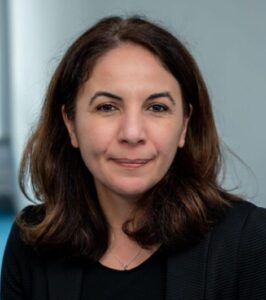
Professor Ella Pereira is a Professor of Computing at Edge Hill University, UK. Her research focuses on key enabling technologies, ranging from distributed services to the Internet of Things (IoT), including cloud, fog, and edge computing. Her work applies artificial intelligence and data analytics to health and other interdisciplinary application areas.
Submit your Research:
AI is having a significant impact on how society functions and how it understands its future. Here are some examples topics that could be considered for presentation:
If AI is a bubble, will it make any difference?
Sustainability and other continuity issues.
Moving from GenAI that chats, to GenAI that does.
Safety, government regulation and internal governance.
AI ethics and fraud.
The effectiveness of scientific research.
Understanding the environment including the issues related to climate change.
Health and social care.
Griefbots and religious iconography.
National defence.
Education from cradle to grave.
Productivity improvements especially in the white-collar environment.
Professional performers, scriptwriters, and other support roles.
Social interaction.
Criminal justice policy and practice.
Local, national, and international travel.
We welcome contributions on these or other relevant topics. We also welcome AI case studies from different settings, e.g., academia, business, project management, digital marketing, design, etc. To present at the symposium it is necessary to submit an abstract describing the proposed talk (no papers are required). The closing date for abstract submissions is 13 April 2026 and selections will be completed by 24 April 2026.
To submit an abstract, click here
The Symposium also welcomes individuals who wish to observe without presenting – see the registration link below for further details.
To register to attend the Symposium click here
- Academic Faculty Registration with a presentation £100
- Student Registration with a presentation £50
- Academic Faculty as an observer without presentation £50
- Student Registration as an observer without a presentation £35
Important Dates
13 April 2026 Closing date for Abstract submissions for presentations
29 May 2026 Final date for Presenter Registrations.
Certification
Certificates of presentation are available on request.
Download the full Symposium details here: 4th Symposium on AI Opportunities and Challenges